
Forty-five degrees, and an estate wired end to end
The estate ran for kilometres in the desert heat — forty-five degrees by mid-morning, the air over the access road moving like water.
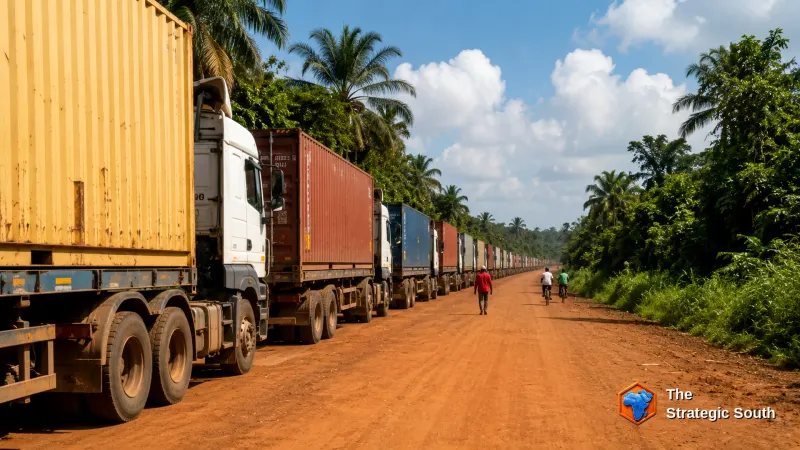
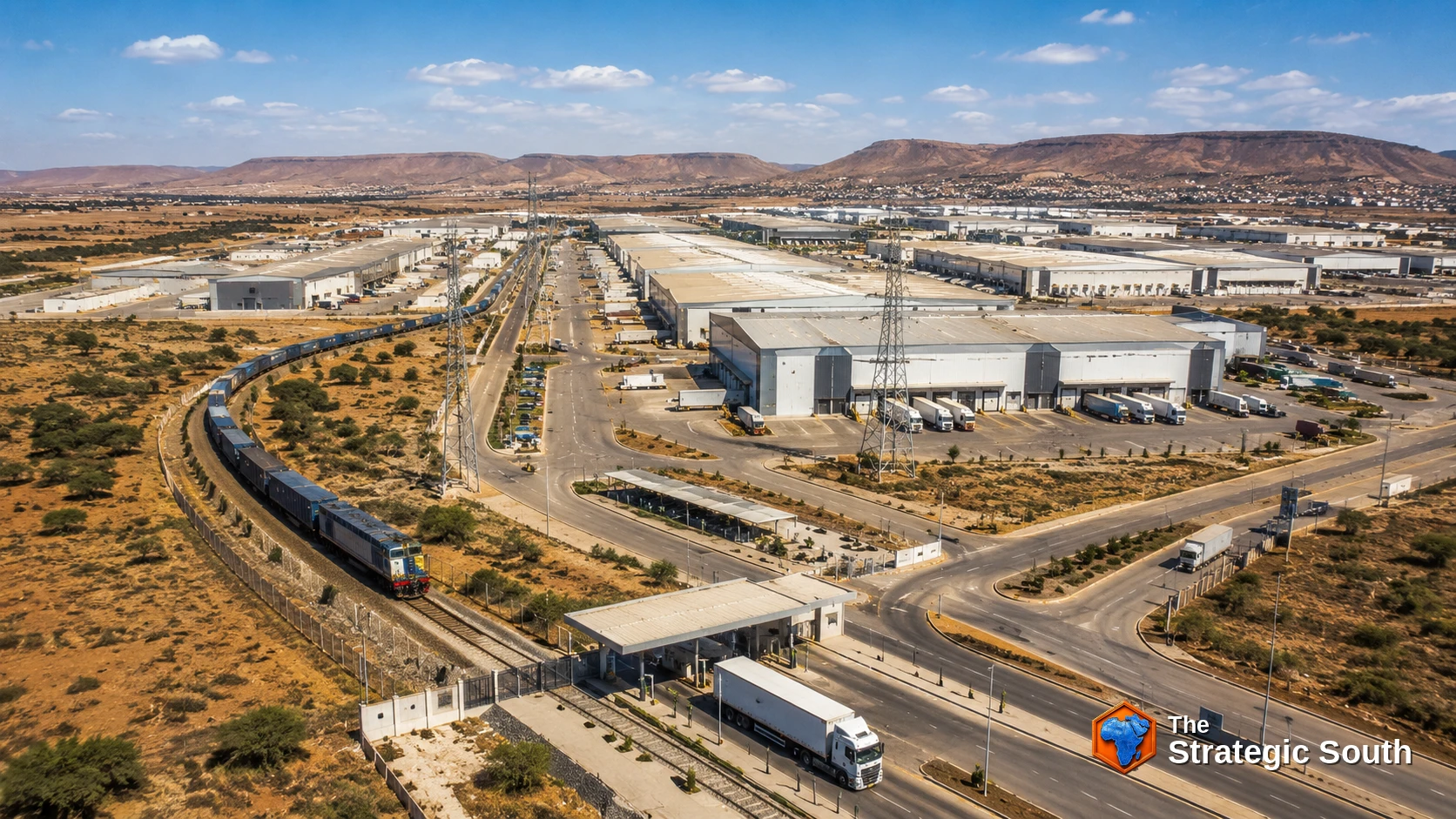
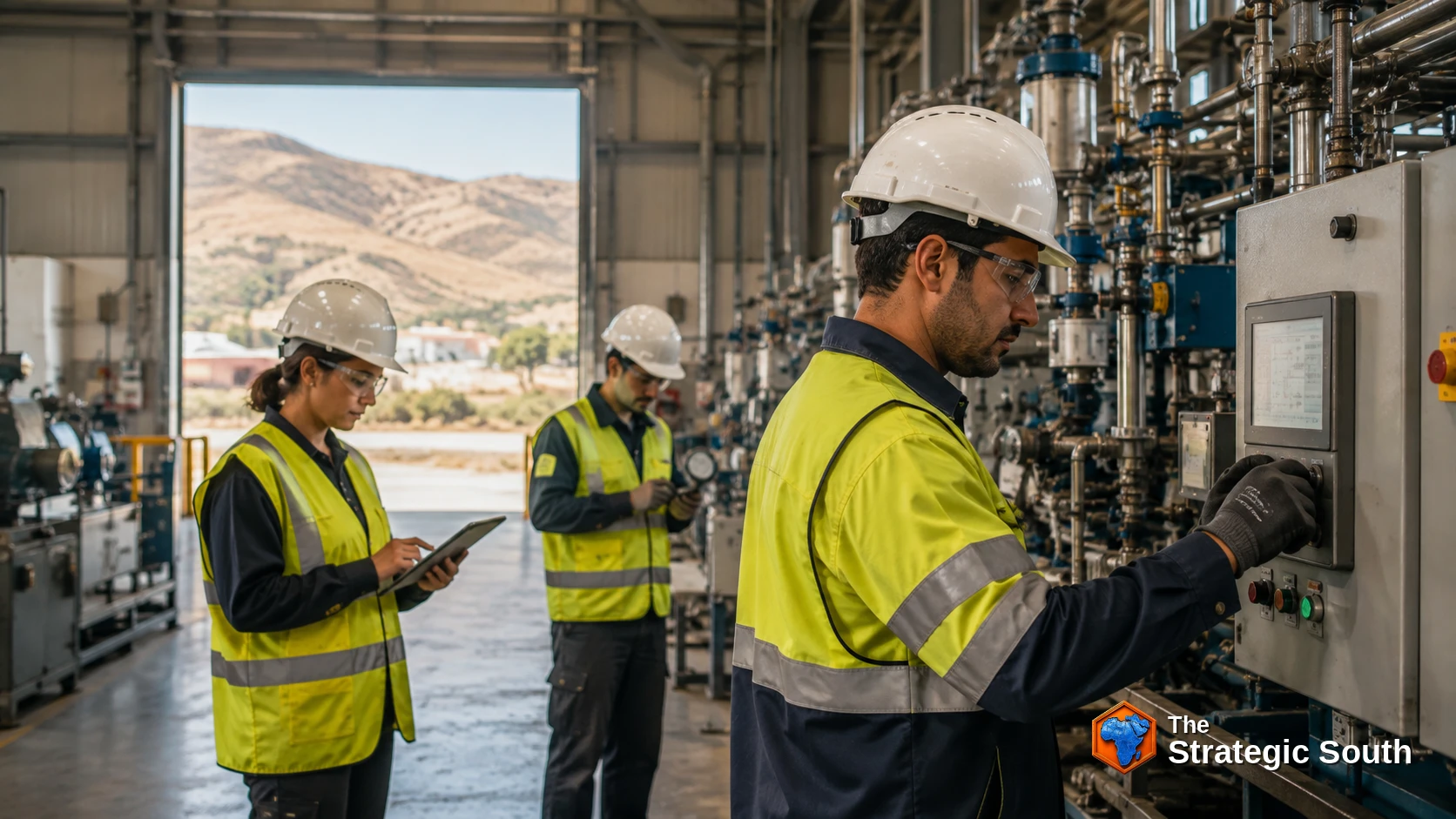
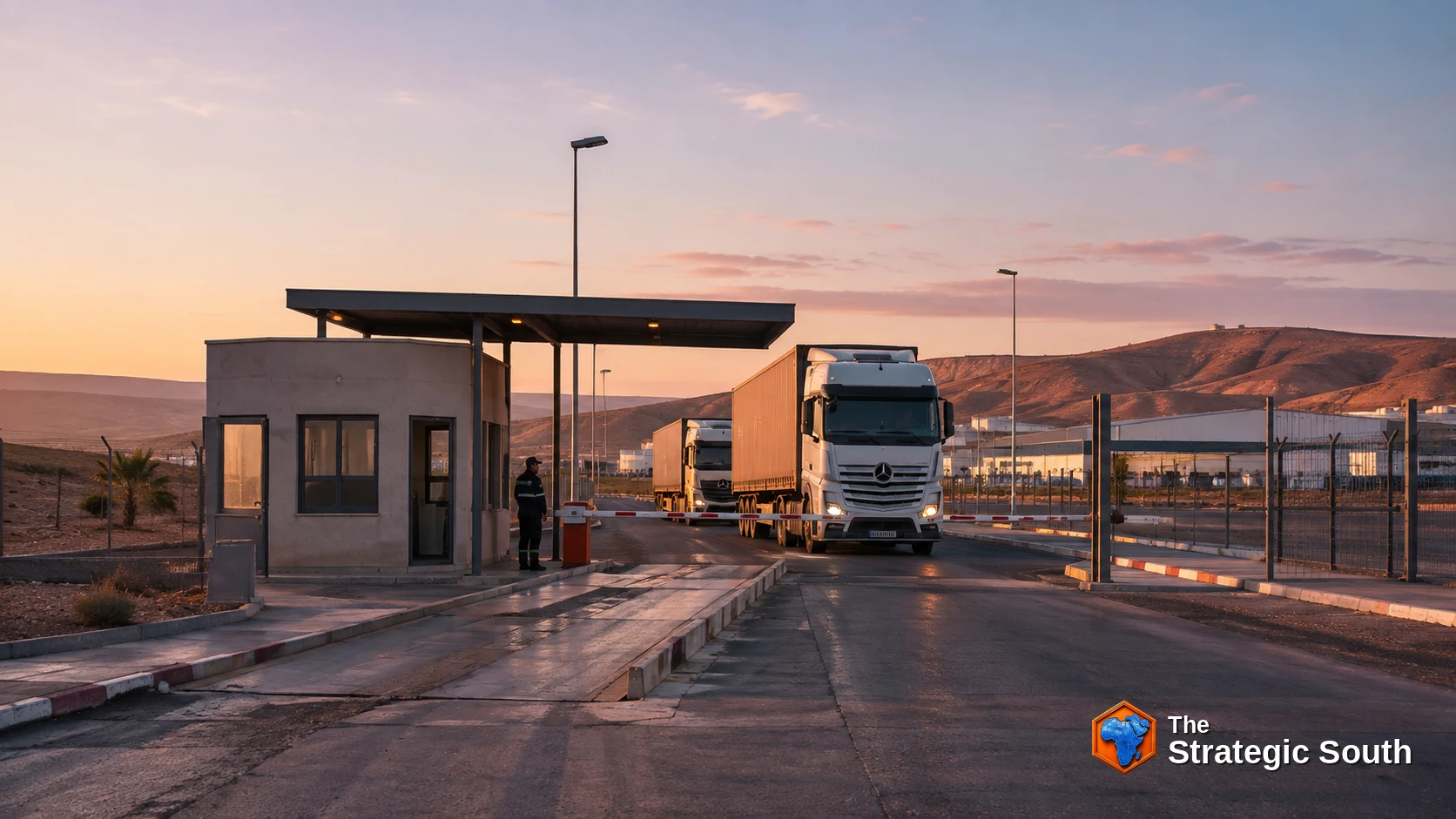
You came in past a customs post at the gate. A barrier, a prefabricated office with an air-conditioning unit bolted through the wall, two or three officers and a queue of trucks that either moved or did not. Behind it, fenced plots in a grid, most of them still empty, waiting on a tenant. Prefabricated sheds with the paint already chalking. A rail spur curling in from the coast, ending in a siding that looked, on a quiet afternoon, like the least important object on the site. A training centre with a classroom and a workshop, run by people whose job was to produce the operators the plants would need in three years. And behind all of that, a park of second-tier suppliers — the machining, the packaging, the fittings, the people nobody names in the press release and every plant on the estate calls twice a week.
I spent the first four years of my career working inside zones like that one, across two regions — North Africa and the Gulf. Tax-free enclaves engineered so that a manufacturer arriving from abroad would find the grid connection, the bonded warehouse, the skilled hands and the export route already in place, waiting, rather than something to be assembled over five years of correspondence with six ministries.
It took me a long time to see what I was standing in. What is visible on that site is land, sheds and a fence, and none of that is the point. The point is the sequence of small permissions and handoffs that lets a container leave a shed at eight and be on a ship by nightfall. Nobody photographs a customs desk. Yet that desk, and the twenty quiet handoffs of the same kind behind it, were the entire reason the zone existed. The plots were the cheap part.
My own work sat inside exactly that logic, which is probably why I noticed it. We were not paid to produce a study and ship it. We were paid to be wired into the client's week — a corridor away, or a short drive across town — close enough to rework an analysis as their thinking moved rather than three weeks after it had moved. Proximity was the product. The value was never the single deliverable that left the building; it was the connective tissue around it, the being-plugged-in that no line item on an invoice ever quite captured.
That estate was, in miniature, the thing I would spend eighteen years watching countries either build or fail to build: not an asset, but the space deliberately wired between assets.
Nobody photographs a customs desk. Yet that desk, and twenty quiet handoffs like it, are the entire reason the zone exists.
A platform is not a building
That is the lens I bring to Morocco, and it is why I read the story differently from most of the coverage. The headlines count ports, megawatts and factories. What Morocco has actually done is rarer on the continent: it wired those assets into one machine — modern ports, rail links, industrial zones, renewable power, logistics platforms, export-oriented plants, and a direct line into the European market.
Taken one by one, these are valuable projects. Taken together, they are the foundation of a competitive industrial ecosystem, and that distinction is the entire game.
A platform is not a building. A free zone is not a fence around cheap land. It is a promise — that the customs desk, the grid connection, the supplier park and the training centre will all be there, functioning, on the morning the manufacturer arrives, and still functioning in the eighth year when nobody is celebrating anything. I lived inside one version of that promise for four years, across two regions, and I watched how much of its credibility rested on things no investment brochure lists.
Morocco has turned the same idea into national strategy. Which is why the honest question is no longer how much infrastructure the country has built. It is how well those assets operate together.
The flagship gets the ribbon; the value hides beneath it
A port is not an industrial strategy. Tanger Med is presented as one of the largest container ports on earth, but its real weight lies elsewhere — in the automotive plants, the logistics zones, the rail and the export routes it is plugged into. Viewed apart, those are infrastructure projects. Viewed together, they are one operating system: factories produce, railways move components, the port connects to global markets, and reliable logistics strip uncertainty out of an exporter's plan.
That is where competitiveness actually begins. Not at the quay, but across the chain behind it. And a chain performs at the speed of its weakest handoff. Can suppliers deliver on time? Can a plant count on stable power year after year? Can goods clear and reach Europe without a file sitting three desks away for a fortnight?
The flagship gets the ribbon; the value hides beneath it — in the grid tie-in, the bonded warehouse, the second-tier supplier who can hit a deadline in August. Get one of those interfaces wrong and the shiniest terminal in Africa becomes an expensive place for containers to wait. Pouring concrete is a procurement exercise; any competent contractor can be paid to do it. Making that concrete useful to a plant two hundred kilometres inland is a different discipline entirely, and it is staffed rather than built.
Predictability is staffed, not announced
On the projects I have run, the pattern has never varied: what a manufacturer is buying when it chooses a location is not an incentive. It is the near-certainty that the whole chain will show up, reliably, for a decade.
Incentives are easy to match. Any competing country can write a lower tax rate into a law next quarter. What cannot be matched quickly is a customs post that clears a manifest in the same time this month as last month, a utility that answers the phone, a supplier park deep enough that losing one firm is an inconvenience rather than a stoppage. Predictable operations, year after year, pull in manufacturers more effectively than any subsidy — and predictability is a thing you staff and own, not a thing you announce.
That is also the part that decays quietly. Concrete fails visibly. An interface fails by getting slower, a week at a time, until an exporter re-routes and never says why.
Depth, not another flagship
So Morocco's frontier now is depth rather than size. The ports, the renewables, the rail and the factories are largely in place. What comes next is deeper supplier networks, higher local content, a climb up the value chain — thickening the ecosystem around the assets that already exist instead of adding one more landmark to the map.
A country does not become competitive because it owns a port, a grid and a row of factories. Plenty of places own all three and still ship out very little that lasts. It becomes competitive when someone tends the space between the assets: the supplier park, the training centre, the customs booth, the grid tie-in, the handoff no procedure quite covers.
Stand at the gate before first light
So set the maps and the ministerial totals aside for a moment, and go and stand at a zone gate outside Tangier before first light.
The night cold has not lifted. The sodium lamps are still on. A line of trucks idles at the customs post, headlights smearing the dust, each trailer loaded with wiring looms and stamped panels from a plant two hundred kilometres inland. A guard lifts the barrier. A clerk stamps a bonded manifest. A forklift pulls a pallet out under the lamps toward a gantry that swings it — still warm from the factory floor — onto a ship bound for a European assembly line by nightfall.
The port is vast and it barely moves in the frame. What moves is the connective tissue between the factories: the truck, the stamp, the pallet, the hands passing the load from one link to the next. Watch that gate long enough and the concrete goes quiet, and you see the country deciding, one load at a time, whether it has built a monument or a machine.
The Strategic South examines how engineering, infrastructure, energy and industrial systems are reshaping Africa and the Middle East — through the lens of project delivery, not press releases. Subscribe to the weekly newsletter, and explore the companion pieces.