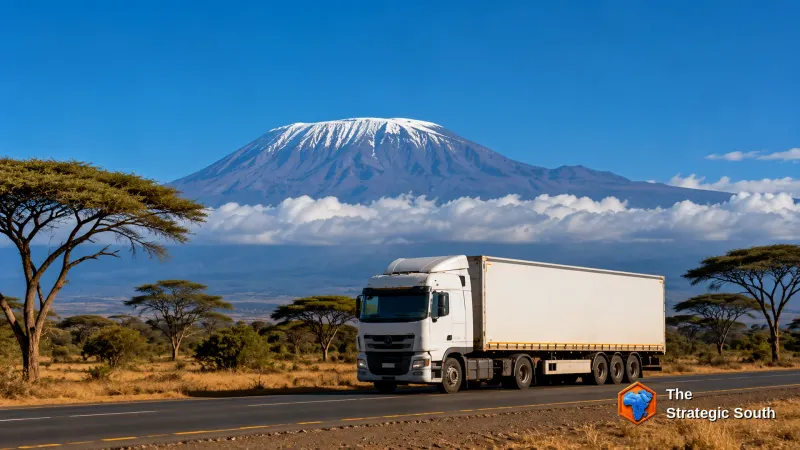

Two pallets, and then the list nobody had checked
The factory acceptance test was almost finished when I counted the pallets again.
We were in one of our engineering centres. The client was in the room, and so was the consortium lead — the two people whose signatures the whole shipment depended on. The equipment had been powered up, run through its test sequence and passed. The reports were clean. All that remained was the part everyone treats as a formality: reading down the lists of material due to leave for a freight line linking a port to its landlocked interior, and confirming that what was on the floor matched what was on the paper.
Two pallets were not there.
Nobody panicked, and nobody should have. We stopped the review, went back through every list line by line, called the warehouse, and found them within the day — in the building, correctly stored, wrongly recorded. That is a good afternoon's work and it is the sort of thing a factory acceptance test exists to catch.
The real problem surfaced weeks later, and it was the opposite shape. Some of the material the line actually needed had never appeared on any list at all. There was nothing to find. It had never been ordered, so no amount of checking the paper against the warehouse would have revealed it; the paper and the warehouse agreed with each other perfectly. What broke the schedule was an agreement between two documents that were both wrong.
Re-ordering took six months to bring the material back to the centre, and another month to move it onward to site. Seven months of slip, on a corridor project, because a list was incomplete — no port at fault, no track at fault, no border at fault.
I think about that whenever a corridor is sold as a line on a map. The line is the visible part. What determines whether it works is everything that has to be right around it, and none of that is photogenic. Nobody photographs a material list.

Dig it, rail it, ship it
For decades, African mining infrastructure has run on three verbs: dig it, rail it, ship it. Find the resource, build the railway, construct the port, export the commodity. It generated real revenue and it connected remote regions to trade. It very rarely turned them into industrial economies.
The Lobito Corridor — linking Angola's Atlantic coast to the copper and cobalt of the DRC and Zambia — is billed as a strategic logistics investment. On its own terms it is a good one: a faster, cheaper route to market for minerals the energy transition cannot do without. But a project is built the way it is briefed. Billed as logistics, it will be delivered as logistics, and a faster export route is precisely the model this continent has been running for a century.
The more useful question is not how to move more minerals. It is how much of their value can be captured before they leave. That is a different project, with a different definition of success, and it is not the railway.
The value leaves with the ore
Here is what a resource railway does if you leave it to itself: it takes value out quickly and brings very little back. Ore goes onto a wagon as rock and comes off a ship somewhere else as somebody else's feedstock. Every tonne that crosses the line as raw material is a tonne of processing, employment, tax base and industrial learning that accrues in another country's economy.
The scale makes it concrete. Copper, cobalt, lithium, graphite — the competition for critical minerals is accelerating, and refined product is worth a multiple of the ore it came from. A country exporting concentrate captures a sliver of that. A country that refines, and then manufactures, keeps most of it.
There is a second asymmetry, and it matters more than the first. The ore body is finite. It depletes with every train, on a schedule you can calculate today. The industrial capability built beside it does not deplete; a refinery trains operators who train the next ones, and a workshop that starts by maintaining wagons ends up machining parts for things that have nothing to do with mining.
So the meter that matters is not tonnes per hour.
The meter that matters is not tonnes per hour. It is value retained per tonne — and on that meter, a railway that only exports is running backwards.
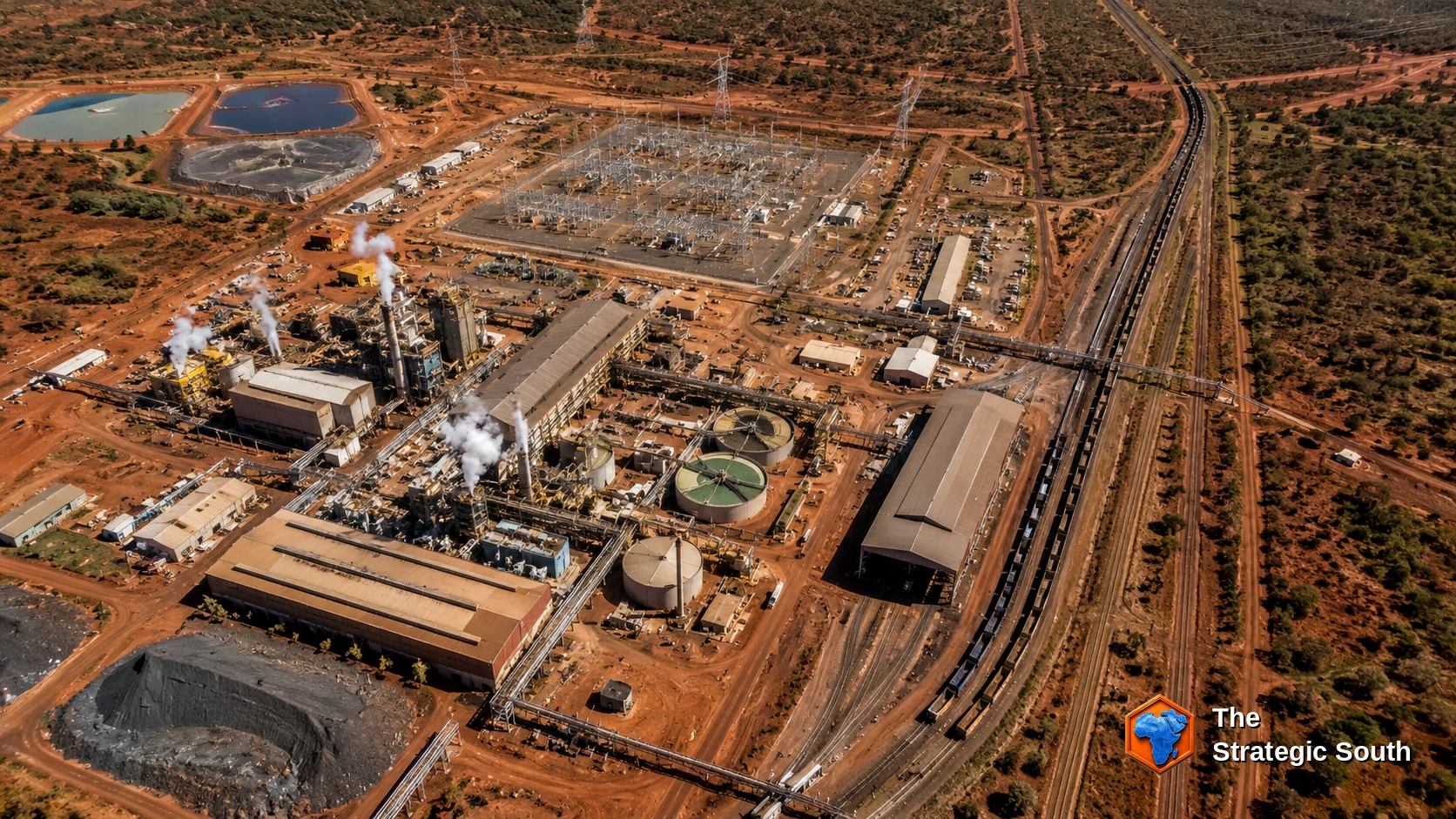
What has an owner, and what does not
The railway has an owner. It has a budget, a completion date, a contractor, a financing package and a minister who will want to stand next to it. Everything about it is designed to be delivered.
The industry beside it has none of those things.
Reliable power, so a smelter can run without its own diesel plant. Rail that serves industrial zones and not only terminals. Logistics predictable enough for a manufacturer to plan a production week around. Skills programmes that start before the plant needs the people. Port capacity able to handle a finished product and not only a bulk one. Every item on that list is a separate project, with a separate sponsor, a separate approval chain and no single completion date — which is exactly why the freight business case never contains any of it. It is not that anyone opposes this work. It is that nobody's mandate covers it, and mandates are what get things built.
There is a timing problem inside this as well. The industry has to be decided while the railway is being financed, not after it opens, because a smelter needs power contracts, a zone needs land and a workforce needs three or four years of training before anyone can hire it. By the time the first train runs, the window in which those things were cheap to attach has closed, and every one of them becomes a separate negotiation with a government that has already had its opening ceremony.
The pattern holds all the way down to the smallest scale. On my own projects, the work that saves a programme is nearly always work no procedure assigned to anyone: the second check on a document two parties already agree about, the supplier date somebody confirms instead of assuming, the question about what is not on the list rather than what is. Nothing in the process generates those. Either a person decides to produce them, or the programme absorbs the consequence. A corridor is the same problem at continental scale, and the missing mandate costs decades rather than months.
I have argued this case before and lost it — once for a gas asset in West Africa, where turning the feedstock into local power was the stronger proposal and was not the one selected. Processing beside extraction is always harder to fund, slower to build and worth several times more. Those three facts are related, and the third one only pays out to whoever is prepared to fight for it against the first two.
Industrialisation is never one project
If eighteen years of delivery have burned one thing into me, it is that industrialisation does not arrive as a project. It is not a railway, not a port, not a special economic zone standing on its own. It shows up when infrastructure, energy, logistics, industry, skills and governance begin reinforcing each other — each one making the next cheaper and more certain. That is slow, unphotogenic work, and it is the only kind that compounds.
Morocco's automotive base is the cleanest recent example of a platform assembled deliberately rather than announced. Extraction creates output. Corridors create connectivity. Only a platform creates competitiveness, which is the sort that outlives the ore body that paid for it.
Lobito's real test, then, has almost nothing to do with train frequency or export tonnage. It is what gets built alongside: the power, the processing, the zones, the suppliers. Get that wrong and it is an excellent export route. Get it right and it is one of Africa's first genuinely integrated industrial corridors.

Where the corridor lands by 2035
Picture Lobito a decade from now, because the choices that decide it are being made this year.
In the first version, the line performs flawlessly. Throughput up, transit times down, copper and cobalt reaching the Atlantic faster and more cheaply than by any route before it. Angola, the DRC and Zambia earn more per shipment than they used to. And the concentrate still lands in someone else's smelter, feeds someone else's cathode plant and becomes someone else's battery. The corridor works exactly as engineered. It was engineered to move rock.
In the second, something quieter has taken root along the rail. A refinery near the Copperbelt turns concentrate into metal before it moves. A transmission line built to power one smelter also feeds an industrial zone. A supplier base that began with rail maintenance is machining parts for the mines, and then for plants with no connection to mining at all. Each of those pieces makes the next cheaper and more certain — which is the whole logic of a platform, and precisely why none of it appears in the original freight case.
The coming decade will sort the continent's corridors into those two outcomes, and the sorting has started. Several governments are now legislating local processing before export. Watch the Copperbelt refining projects under negotiation, the special economic zones being drawn around the Angolan ports, the training pipelines written into mining concessions rather than promised after them. Where those materialise, the corridor thickens from a line into a region. Where they stall, it stays a very good pipe with a depleting reservoir at one end.
My own bet, having watched which projects survive contact with reality, is that Lobito settles between the two, and that its exact position will be fixed by neither geology nor geography but by who turns up over the next ten years to build the half that does not sell itself. The ore body depletes on schedule regardless. The refineries, the grid, the machinists and the future plant managers either accumulate beside the track or they never exist at all. So here is the number worth writing down for 2035: not how many tonnes crossed Lobito, but how much value stayed — and how much of what stayed had, by then, nothing left to do with mining.
The Strategic South examines how engineering, infrastructure, energy and industrial systems are reshaping Africa and the Middle East — through the lens of project delivery, not press releases. Subscribe to the weekly newsletter, and explore the companion pieces.