

The climate never signs off
In the Gulf, the climate behaves like a contractor who never demobilises. It shows up every summer, unannounced, with a punch list nobody agreed to: 48°C on the platform, a grid buckling under its own cooling load, a desalination train asked to hold output while the sea it draws from warms. It does not accept handover and it does not sign off at commissioning. It comes back the next July, and the one after that, to inspect whether what you built still performs — and it keeps inspecting for thirty years.
That quietly redefines what "finished" means. We know how to build in the Gulf. The engineering to pour a port, string a rail corridor or commission a desalination plant in one of the hottest inhabited places on earth is well understood, and the region has done it at a scale nobody else has matched. Cranes are not the constraint. What separates a project that creates value from one that merely exists is what happens after handover — whether the thing still performs on the day the conditions turn against it.
Eighteen years delivering critical energy and infrastructure across the region taught me to read every megaproject through that lens: not the opening, but the thirtieth summer. The region has never lacked ambition or capital to put into the ground. What is scarce, and getting scarcer, is the discipline to keep an asset delivering once the launch is a memory.
What rescue diving taught me about design margin
I learned the underlying principle away from work, and I did not expect it to transfer.
Outside the job I qualified as a professional coach, and I dive — dive master and rescue diver. The second of those is the one that changed how I read a design. A dive master takes people underwater and answers for their return to the surface. Rescue training is almost entirely the study of things going wrong: a diver out of gas, a diver unresponsive at depth, a buddy pair separated in poor visibility, an ascent that has to be controlled when someone has stopped being able to control it. You rehearse those, repeatedly, in conditions where nothing has gone wrong at all.
The planning discipline is the same shape. Before you get in the water you agree the turn pressure, the reserve, the maximum depth, what happens if the current has moved, who surfaces with whom. The plan is not built around the dive you expect. It is built around the dive that goes wrong at the worst possible moment. The competence that matters is never the competence you use when everything is fine — that competence is common, and it is not what anyone is paying for.
I am wary of borrowing metaphors from hobbies, so let me be precise about what does transfer and what does not. Not the drama, and not the water. What transfers is a habit of mind: plan the failure before you commit, size the margin for the worst plausible day rather than the typical one, and train the people who will have to act when the margin is being spent. That habit is exactly what Gulf infrastructure now needs, and it is the habit that budget reviews strip out first.
Capacity was the old scoreboard
For most of the industry's history, infrastructure was scored by size. Kilometres of track. Megawatts installed. Cubic metres of water per day. Container moves per hour. Bigger was the objective, and the opening ceremony was the finish line — the moment the number was banked and the cameras left.
That scoreboard is now misleading. Across the Gulf and the wider MENA region, demand has changed shape: more people, larger cities, and an appetite for uninterrupted cooling, water and power that did not exist a generation ago. The test is no longer whether a thing can be built — here, the answer is almost always yes. The test is whether it keeps delivering when every operating condition moves the wrong way at once: peak heat, peak demand, peak strain on the grid and the water chain, all in the same afternoon.
Capacity numbers describe the best day. The interesting question is what the system does on the worst one.
Heat is now a line in the P&L, not the weather
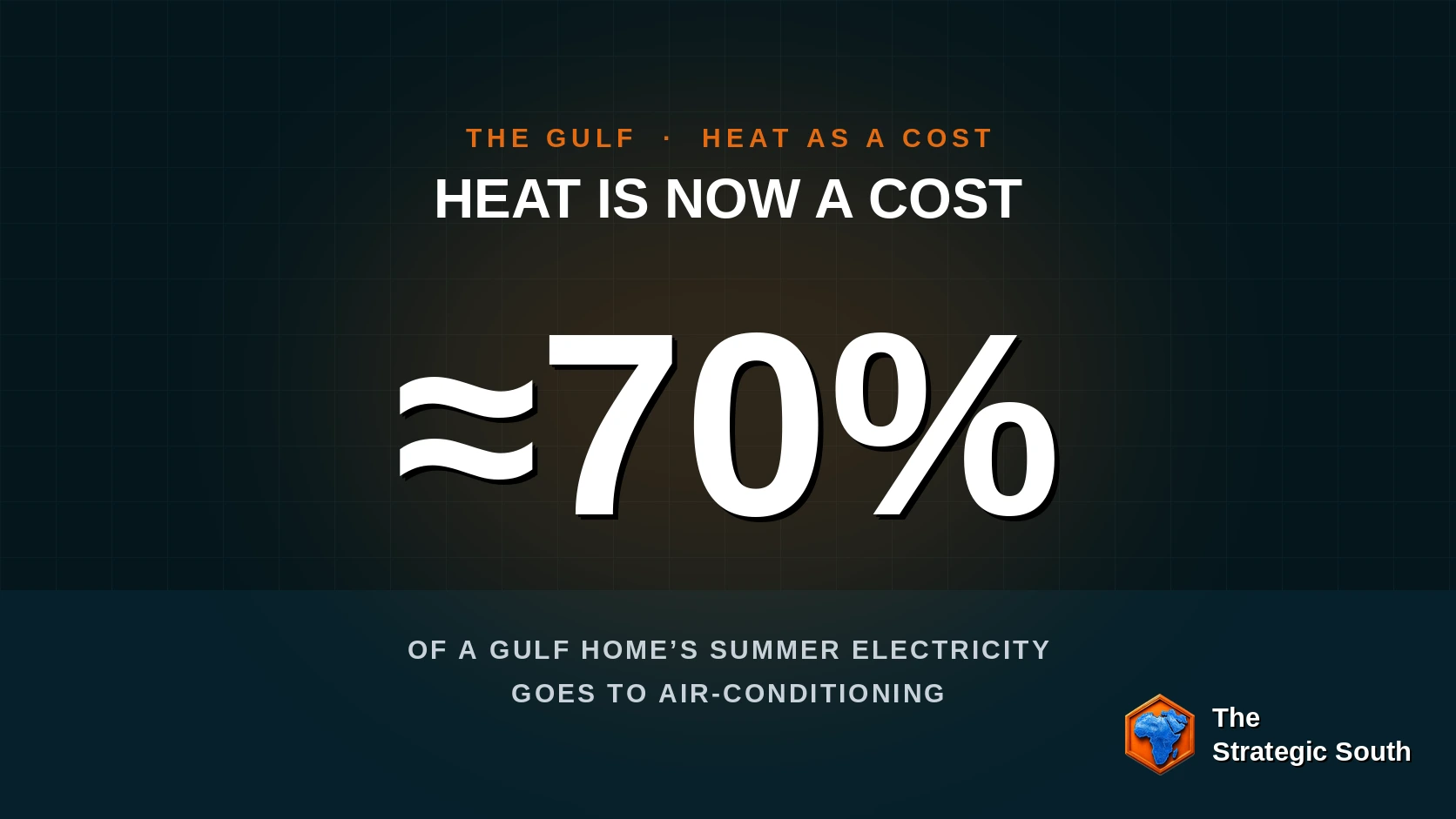
Extreme heat used to be a climatic footnote — a design temperature you looked up once and moved on. It has become an operating parameter that shows up in the accounts. In several Gulf cities, cooling drives well over half of summer peak electricity demand; the grid is effectively sized around the air conditioning. Every degree of ambient temperature costs efficiency in a way that compounds: pumps work harder, thermal margins shrink, and the same plant that ran comfortably in March starts running at the edge of its envelope in July.
Water is the twin of that problem. Much of the region drinks what it desalinates, which means potable water is really an energy product — produced by a chain of intakes, membranes, pumps, storage and distribution that is only as reliable as its weakest stage. Plan the water and the power apart, as the region long did, and you find out the hard way that they were never separate systems.
So I read heat and water scarcity as engineering and economic parameters, not as weather. They set the design envelope, they set the operating cost, and they decide, quietly, whether an asset is a profit or a liability across a thirty-year life. Heat is now a line in the P&L, not the weather.
Resilience is a property of systems, not assets
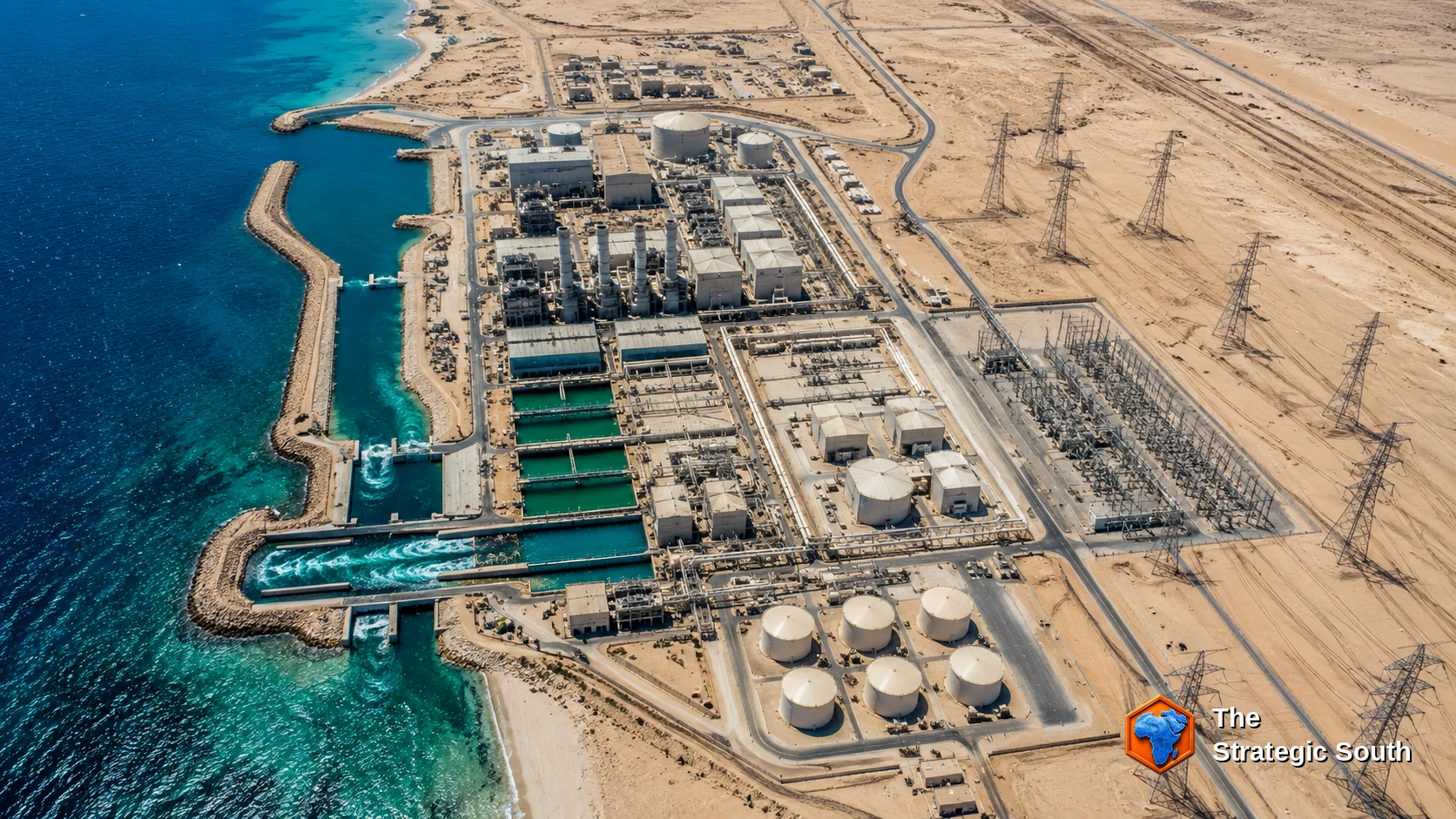
The instinct, when reliability becomes the priority, is to buy a bigger asset — a larger plant, a fatter margin, redundant capacity. That instinct is mostly wrong. Resilience does not live inside any single asset. It lives in how the assets are joined.
A desalination plant does not deliver water security. Water security is the plant, plus the power feeding it, plus the storage that covers an outage, plus the maintenance regime that keeps the membranes healthy, plus the operators who know exactly what to do at three in the morning when an intake trips. A district-cooling scheme protects a city's productivity only if the electricity, the chilled-water network and the metering hold together as one. The asset is a component. The service is the system.
I learned that on freight corridors and energy programmes a long way from the Gulf, and the law does not change with the geography: a chain performs at the level of its weakest connection, and connections are managed rather than built. Where two organisations each optimise their own link and neither is accountable for the journey end to end, a well-engineered system will still fail. Close that gap and a fragile-looking arrangement holds. Leave it open, and the biggest plant in the region still trips.
You cannot pour resilience — you assemble it.
The line everyone underfunds
If I had to name the single item that decides whether a Gulf megaproject ages into an asset or a liability, it is the one cut first in every budget review: operations and maintenance under extreme conditions.
It is easy to see why it gets cut. O&M is unglamorous, it photographs badly, and its value only shows up years later, on the days nothing goes wrong. But the asset that wins is rarely the biggest. It is the one still delivering at 48°C when a rival's has tripped offline — and that difference is bought years earlier, in spare-parts strategy, in condition-based maintenance, in operators trained and retained rather than replaced.
The mistake is to read O&M as an operating expense to be minimised. O&M is really the insurance premium on the entire capital cost. Underprice it and, on the day the plant trips in a heat wave, you are not saving money — you are discovering in public exactly what the saving bought.
I have watched capable teams underfund that line and then be genuinely surprised when performance decays in the second decade. It is the most predictable failure in the business. The heat does not negotiate and it arrives every summer. Engineering for it once, at commissioning, and then starving the operation that has to sustain it, is a decision to lose slowly.
Engineer for the worst day, not the average one
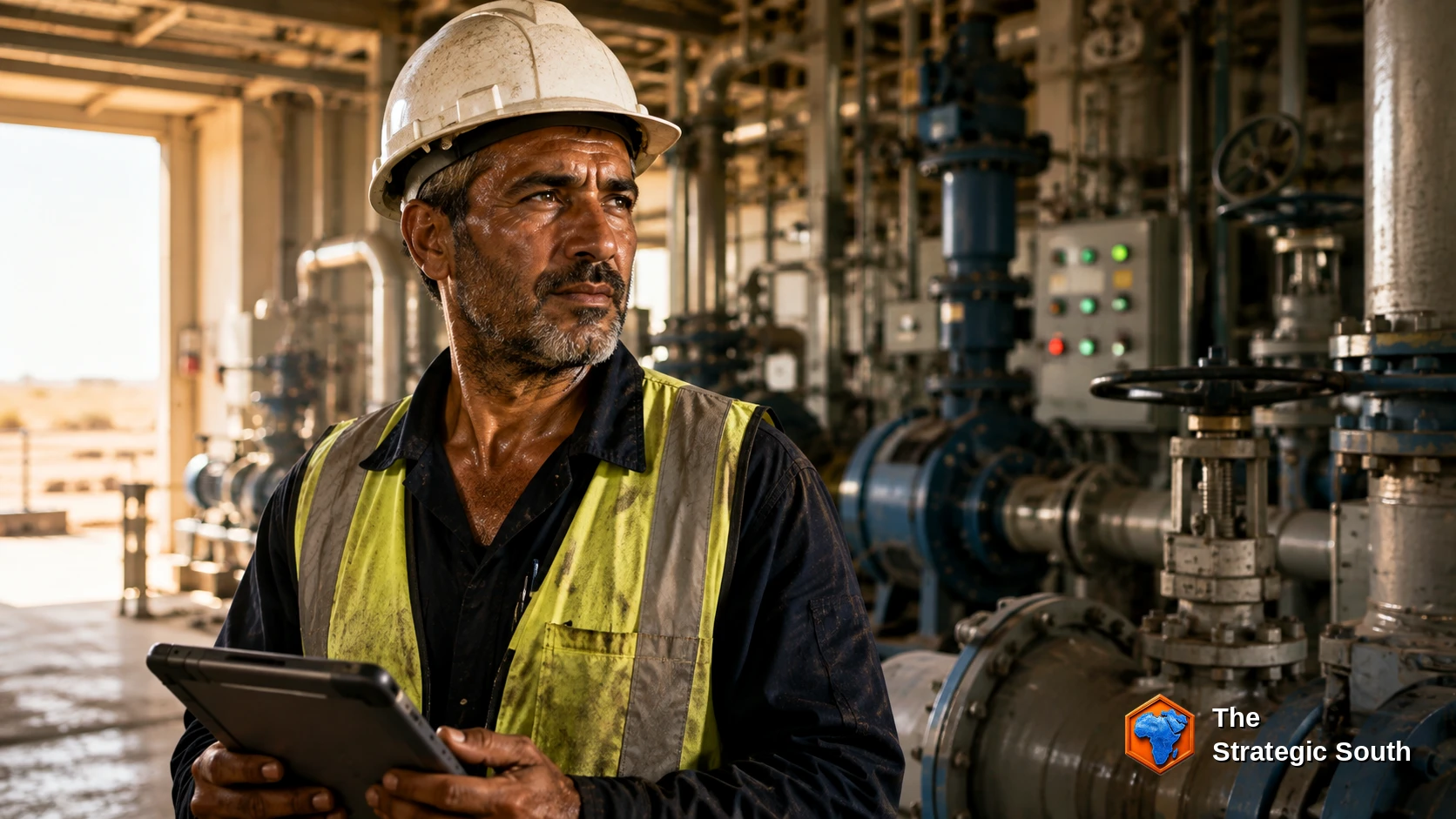
There is a design philosophy underneath all of this, and it is a choice rather than a formula. You can engineer for the average day — the statistically typical load, the mean temperature, the normal demand curve — and build something cheaper that works most of the time. Or you can engineer for the worst day: the peak-heat, peak-demand, something-already-broken afternoon that tests every margin at once.
In a temperate market, designing for the average is often defensible. In the Gulf it is a trap, because the worst day is not a rare tail event. It is every July, and it is getting hotter. The margin that looks like over-engineering in the business case is the margin that keeps the city running when a rival's system browns out.
That is the reversal decision-makers here have to make. Resilience is not a cost to defend against the budget. It is the feature you compete on. The reliable system wins the manufacturer, the data centre and the investor that the disruption-prone one quietly loses.
And a system engineered that way still has to be operated by people who have rehearsed the bad day. That is where the coaching qualification has been more useful than I expected: capability in a hostile environment does not accumulate by itself, and it does not survive turnover unless someone is deliberately building it. The operators who nurse a plant through a heat wave, the crews who catch a fault before it becomes an outage, the engineers who understand their system well enough to improvise when the manual runs out — none of them appear on a drawing, and all of them are the reason the drawing still works in year ten. I would fund that line before I funded another megawatt.
Delivery is the start, not the finish
The Gulf has proved beyond any doubt that it can build, bigger and faster than almost anywhere on earth. The frontier is no longer construction. It is performance under stress, sustained over decades, in a climate that keeps raising the bar.
For a project director that changes the definition of the job. Delivery is not the finish line; it is the day operations begin, and operations are where infrastructure finally earns or loses its economic value. The passenger judges reliability, not the engineering drawing. The manufacturer judges continuity. The investor judges the operating system around the asset, not the asset alone.
You cannot pour resilience. You assemble it, and then you keep assembling it every year the contractor comes back to inspect. What decides whether the region's next generation of infrastructure becomes an advantage or a monument is quieter than any announcement: whether the plant is still holding output at 48°C on a July afternoon in year thirty, with the same crew who knew what to do at three in the morning.
The Strategic South examines how engineering, infrastructure, energy and industrial systems are reshaping Africa and the Middle East — through the lens of project delivery, not press releases. Subscribe to the weekly newsletter, and explore the companion pieces.